Changan Nevo Q05: Makes Sense

The trajectory of the Deepal cars and their designs in Nepal has been interesting.
They started off super aggressive with the S07. Truth be told, it was never a design that was going to age particularly well, and seasoned automotive enthusiasts caught on to that pretty quickly.
However, if the objective was to make an impact, it was the perfect car. People likened it to the Urus, and its sharp, in-your-face design language certainly got attention. It was a great way to start things for the company, simply because everybody noticed it.

Unfortunately, some of these cars ended up in the hands of a few brash, pubescent cretins who seemed to drive as though the roads belonged to them. For many of us, the S07 consequently became associated with a kind of driving that serious, mature drivers probably wouldn't want to be associated with.
Then came the S05, untarnished by hooligans, at least for now. The compact SUV had a much more muted design, but still packed plenty of premium appeal. It felt more serious, more deliberate, and offered considerably more value for money. One of our own team members ended up buying one, and there has been very little to complain about since.
Now comes the Changan Nevo Q05. Although it does not carry the Deepal name, it does place itself under the Deepal S05 and seems to be designed to do one thing particularly well: sell in volume.
It is effectively an even more accessible version of the Deepal formula, but that doesn't mean Changan has simply stripped everything back to hit a price point. In fact, the Q05 might be one of the more interesting cars to come out of the Changan stable yet.
Changan calls it a "New-Energy Smart Living Enabler", which is a rather elaborate way of saying that this is meant to be a practical, comfortable, technologically loaded electric SUV for everyday life.
More importantly, MAW Vriddhi has the infrastructure to back it up. The company is Nepal's largest EV importer and operates the country's largest CCS2 fast-charging network, with more than 180 stations. That counts for something when you're buying an EV in Nepal.
So, what is the Q05 actually like?
EXTERIOR
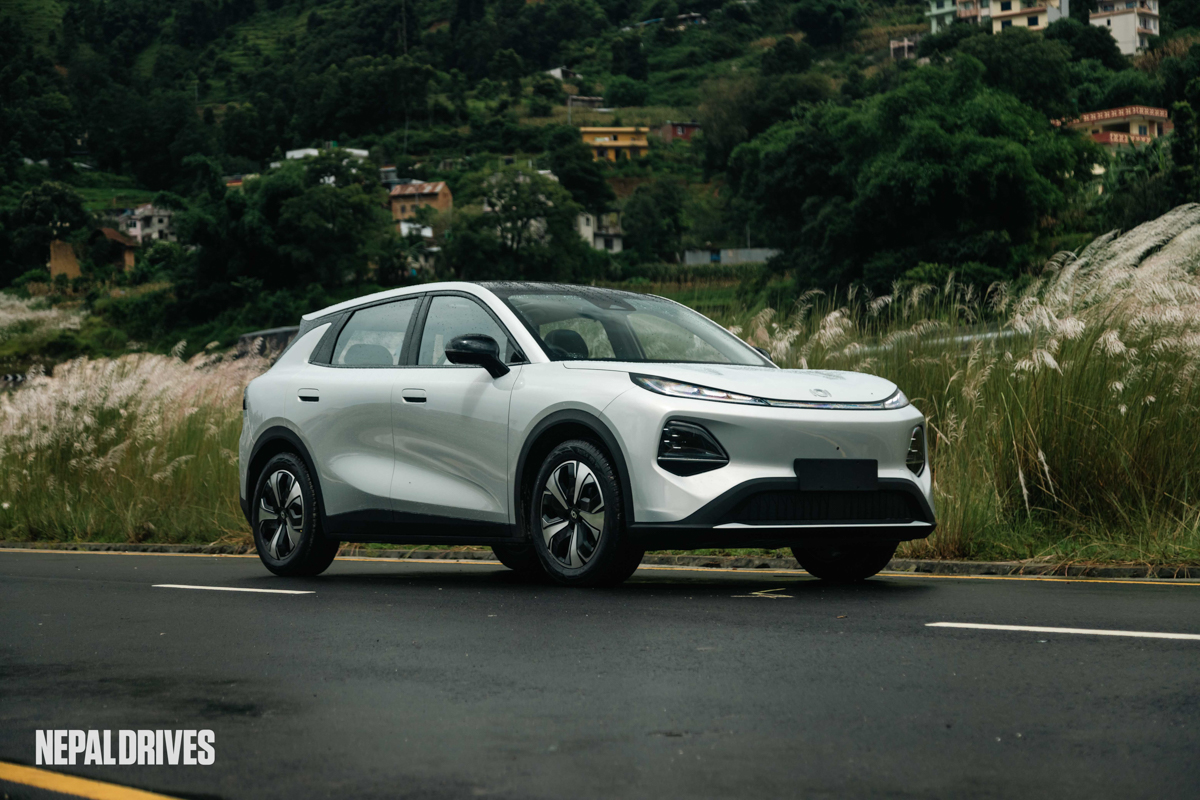
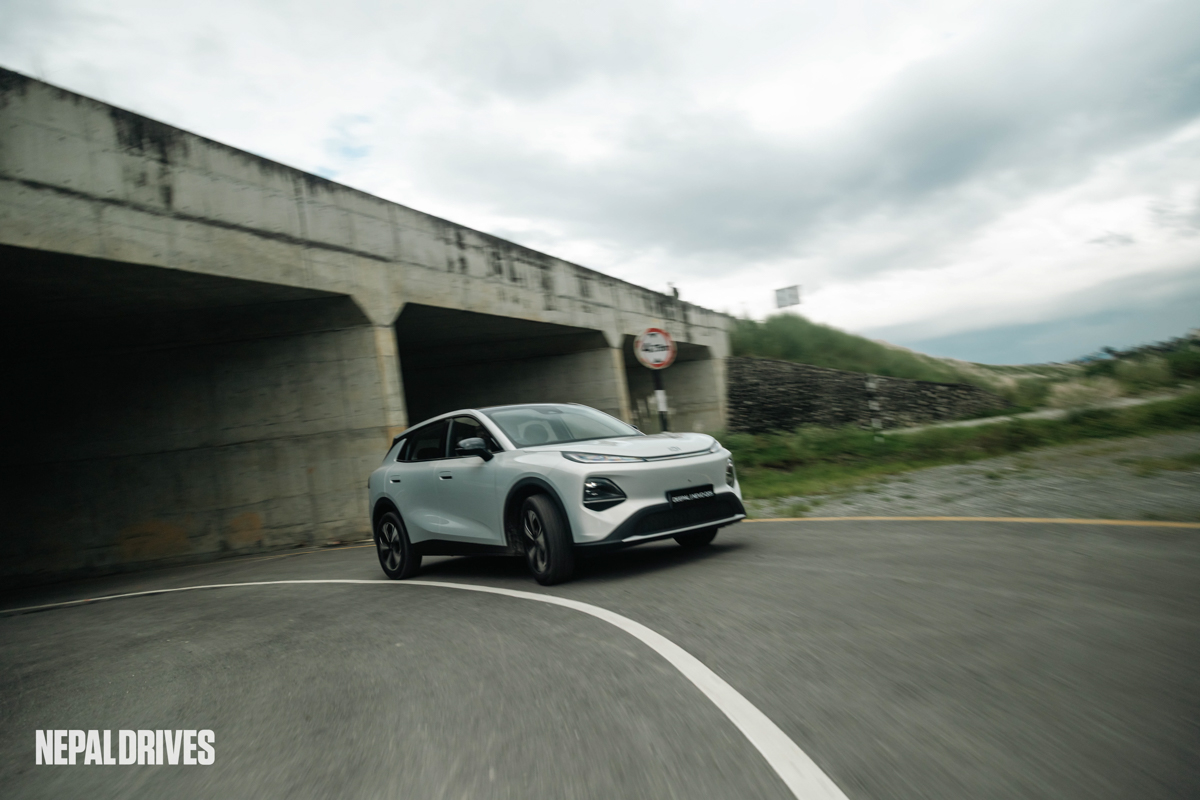
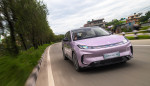
The Q05 is a slick-looking thing. It doesn't have the visual aggression of the S07, nor does it try particularly hard to look intimidating. Instead, there is a certain restraint to the design that makes it feel considerably more mature.
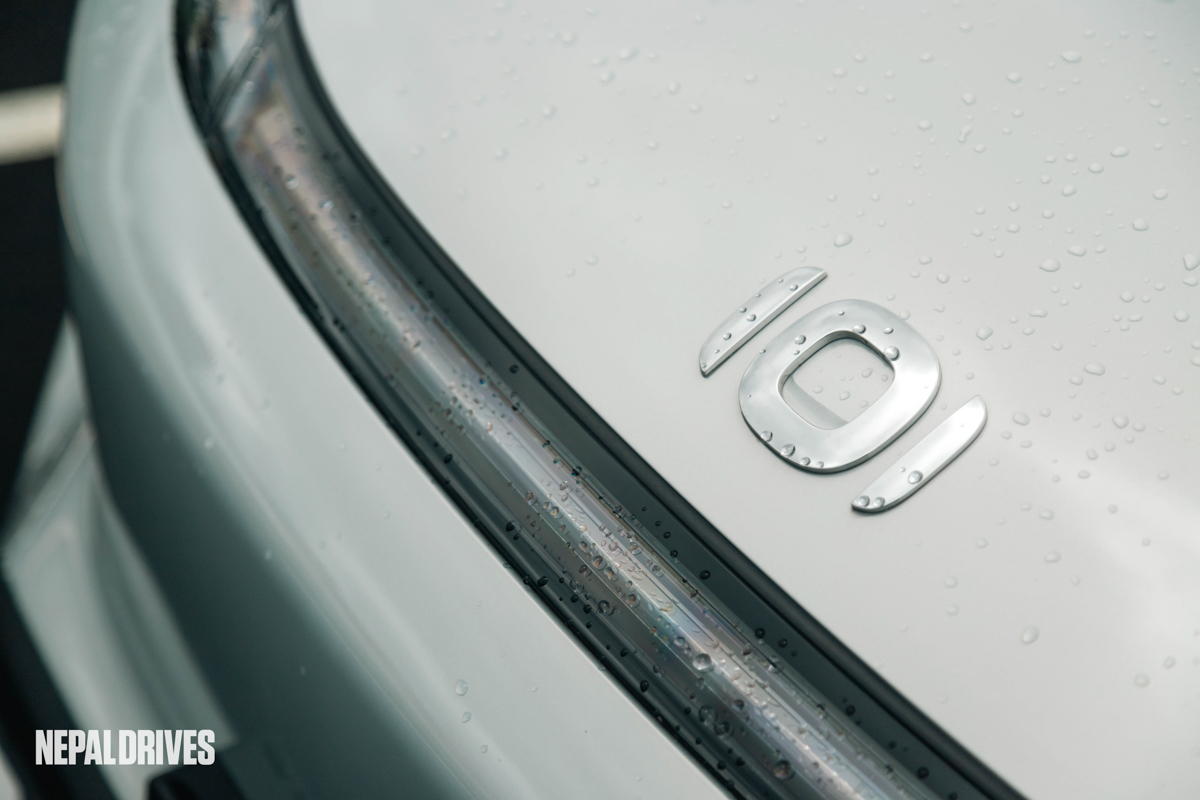
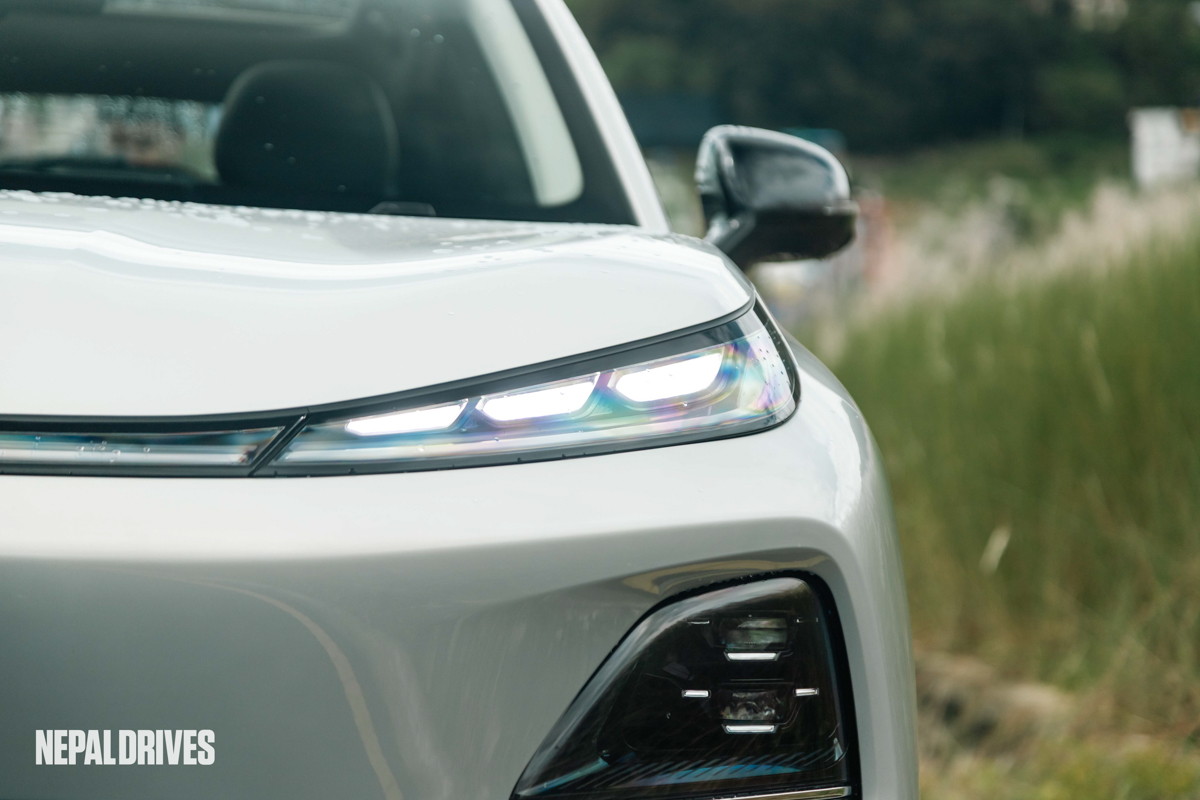
The highlight at the front is undoubtedly the full-width Digital Wing 2.0 DRL, which runs almost completely uninterrupted across the nose. It gives the Q05 plenty of character, particularly at night.
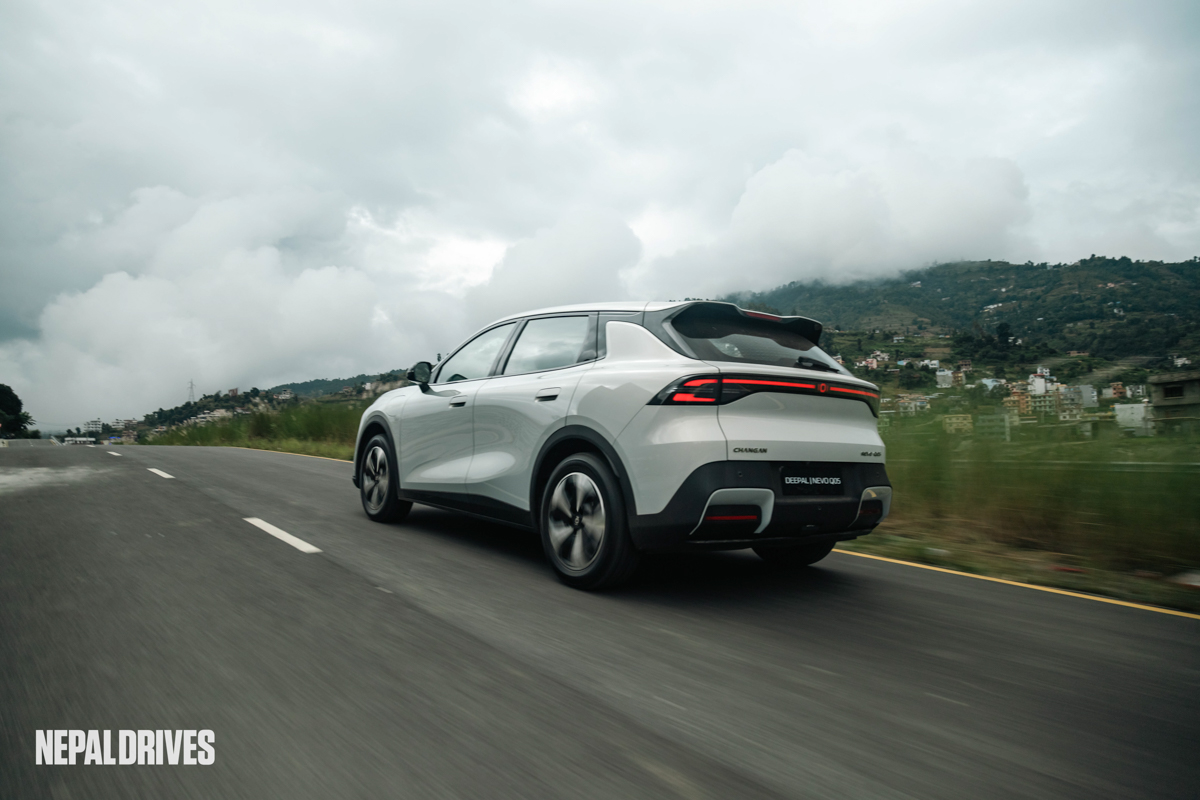
At the rear, the star-ring matrix taillights are equally distinctive, with the illuminated logo sitting between them. It is a fairly elaborate lighting signature, but somehow it doesn't feel excessive.
The Q05 was designed under Klaus Zyciora, formerly Head of Global Design at Volkswagen Group, alongside a large international design team. Whether that means anything to you is debatable, but the end result certainly doesn't look like an afterthought.
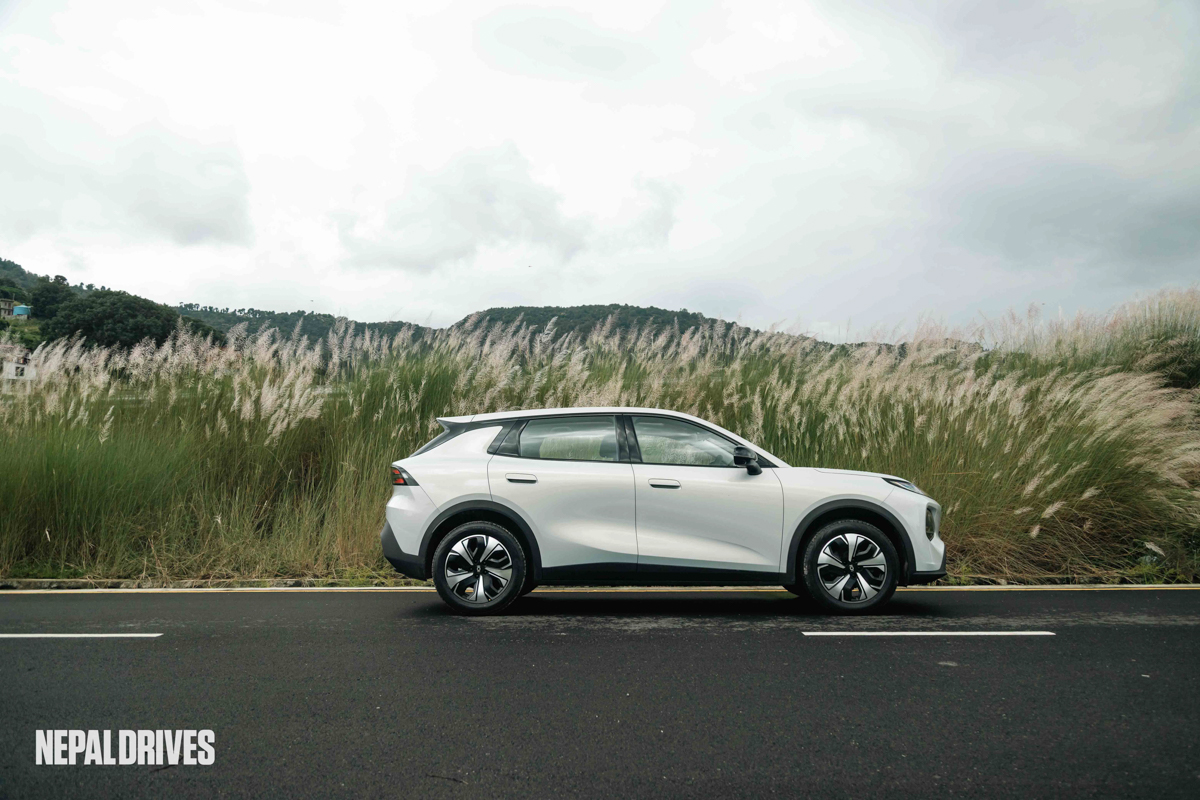
From the side, however, things get much more familiar. In fact, the Q05 is almost identical to the S05 in profile. It is slightly smaller, measuring 4,435 mm in length, 1,855 mm in width and 1,580 mm in height, while riding on a rather substantial 2,735 mm wheelbase.
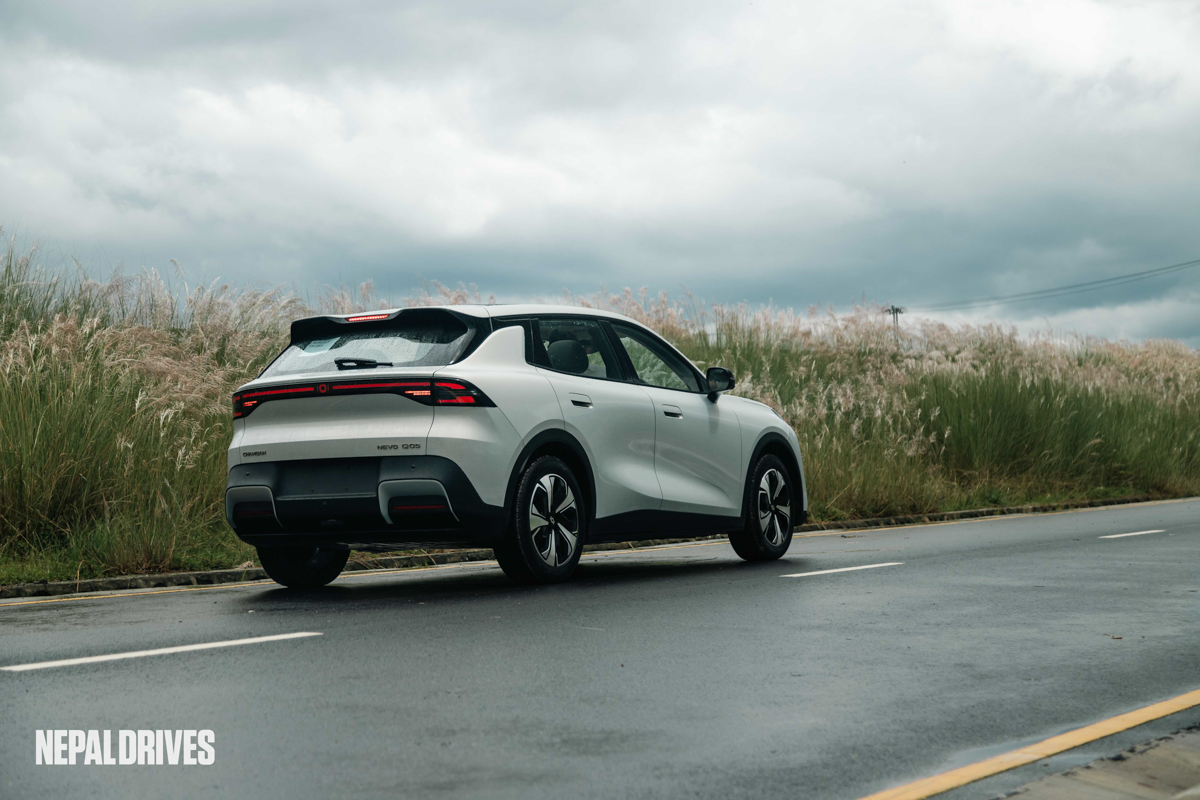
The Q05 promises 185 mm of ground clearance, depending on the tyre profile chosen, which should be enough for the sort of urban and light rough-road duty this car is intended for. There are 17-inch wheels on the Max variant and 18-inch alloys on the Ultra, with the latter getting 225/55 R18 tyres.
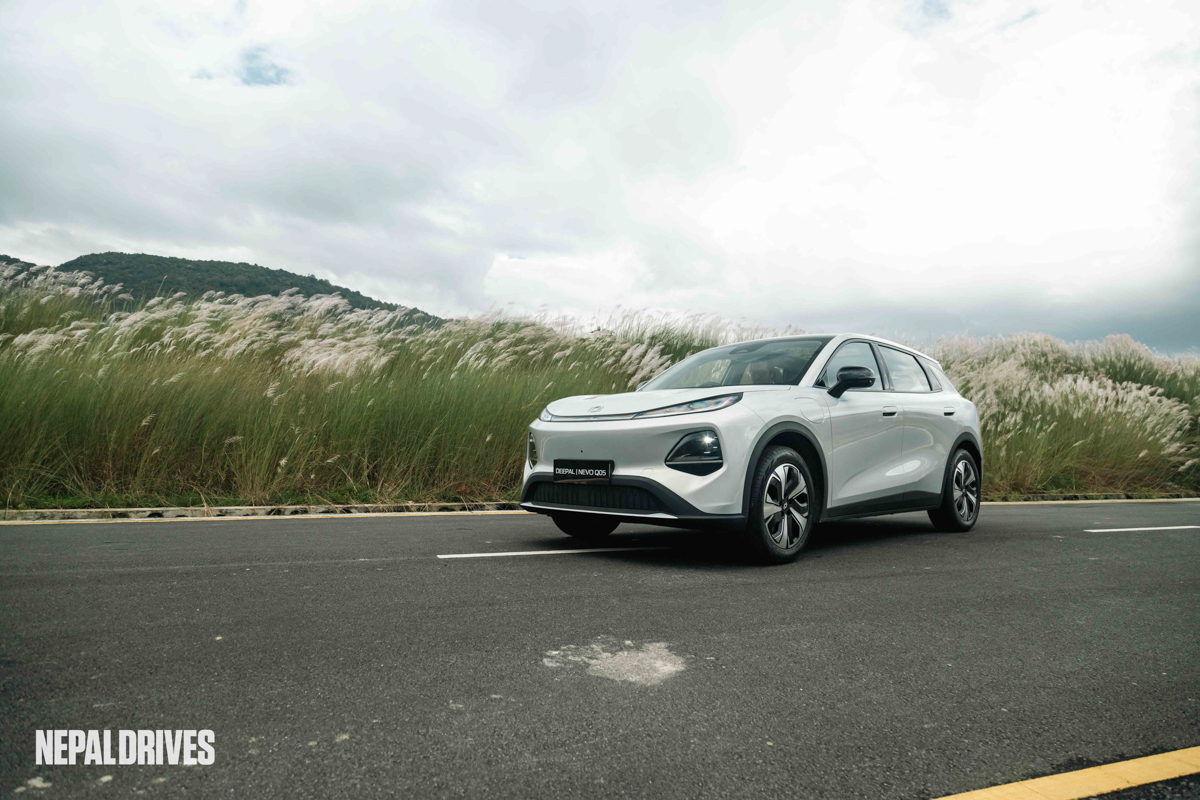
Overall, it is a design that should age rather better than the S07's. There is enough going on to make it recognisable, but not so much that you expect to look back at it in five years and wonder what the designers were thinking.
INTERIOR AND FEATURES
If the exterior is restrained, the interior is where the Q05 makes its value proposition particularly obvious. The first thing you'll notice is just how quiet it is.
In the short time we spent with the Q05, the cabin felt impressively isolated from the outside world. That isn't entirely surprising, given the amount of attention Changan has apparently paid to sound insulation, but the end result is noticeable.
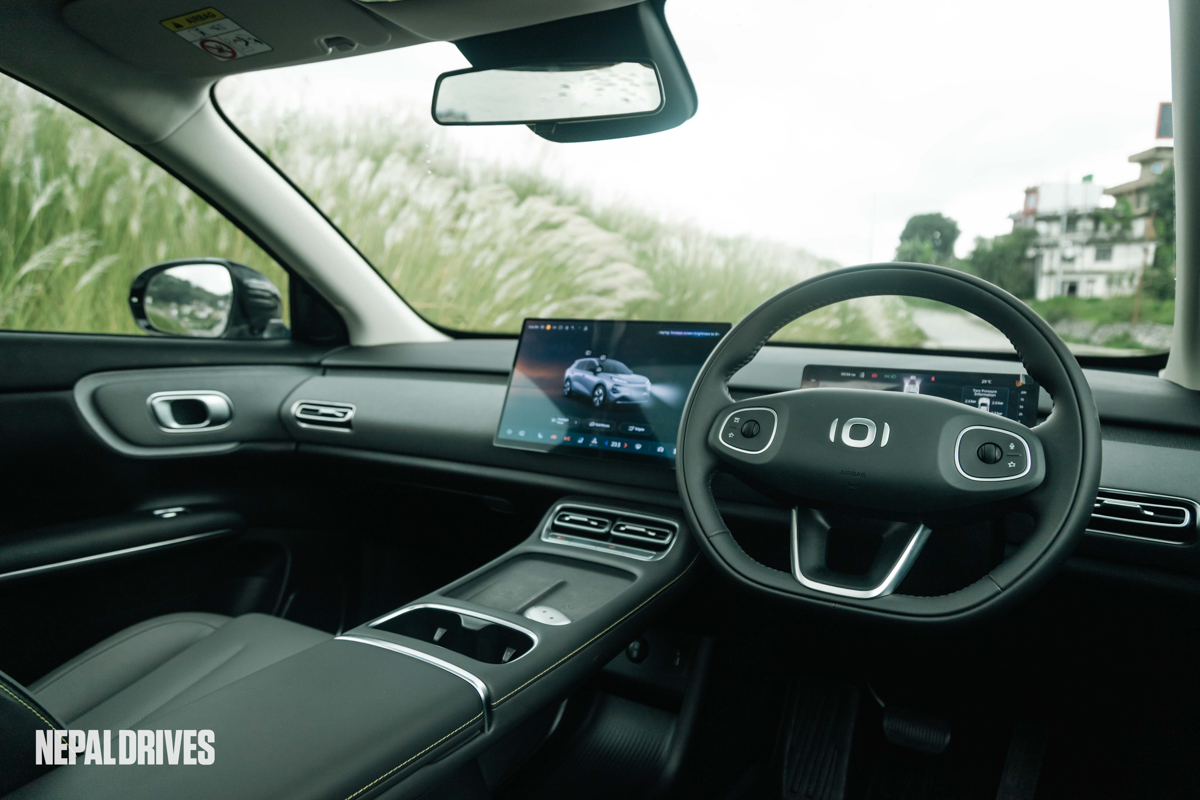
And then there is the space. Despite its relatively compact exterior dimensions, the Q05 has a 2,735 mm wheelbase, which translates into an unusually roomy cabin.
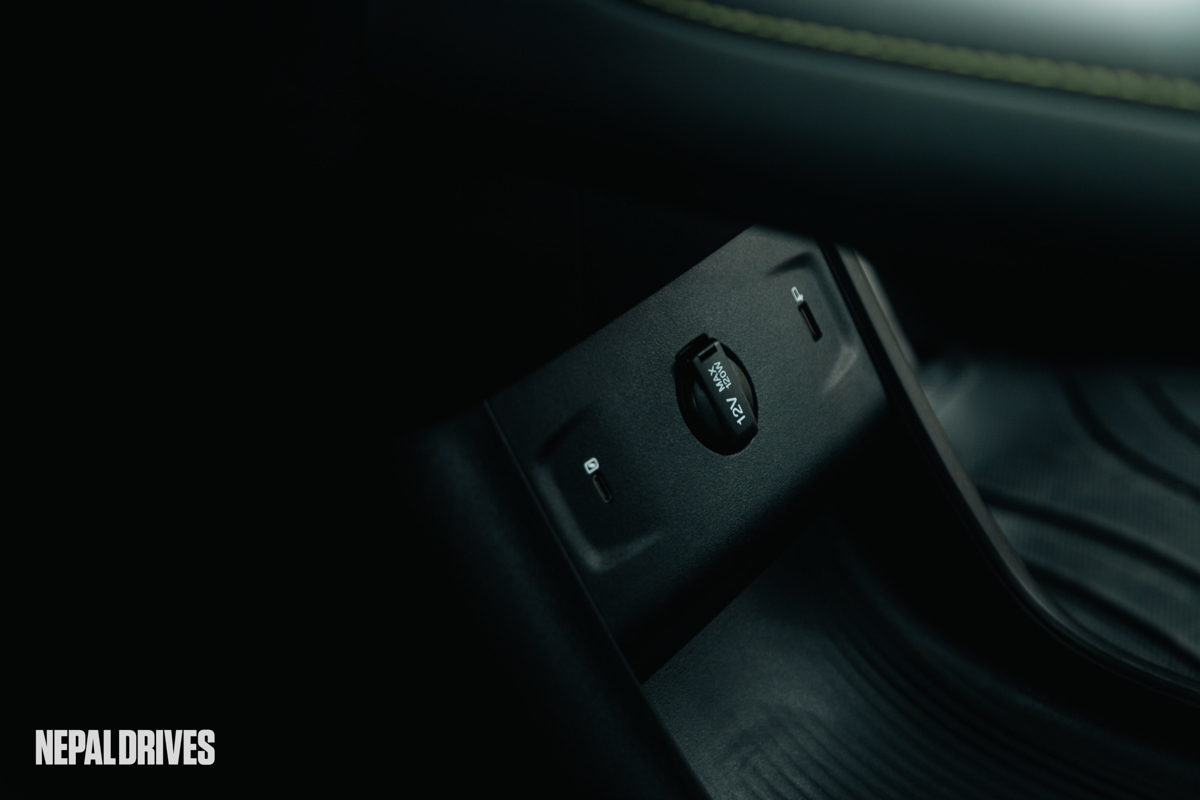
There are plenty of storage areas scattered throughout the cabin, and they have generally been placed where you'd expect them to be.
This is the kind of thing that sounds trivial on paper but becomes increasingly important once you start living with a car. Phones, bottles, cables, sunglasses and all the other rubbish we carry around somehow need somewhere to go.
The boot is similarly impressive, with 540 litres of total space. That includes a 90-litre hidden compartment underneath the main boot floor, which is particularly large… almost enough to fit a spare tyre that is not there.
Up front, the dashboard is dominated by a 14.6-inch 1080p central touchscreen, accompanied by a 10.17-inch digital instrument cluster. Both variants get wireless Apple CarPlay and Android Auto. There is also wireless phone charging, mobile-app connectivity, Bluetooth key functionality and over-the-air updates.
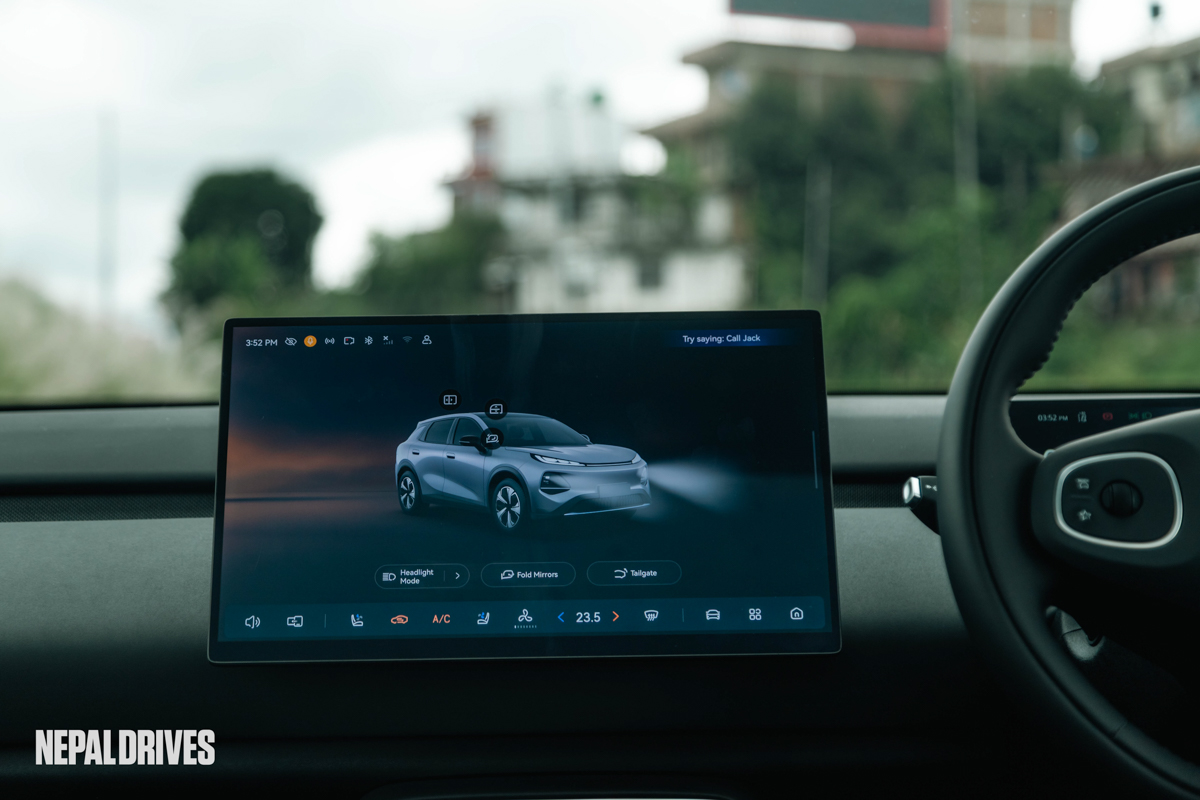
That last one is becoming increasingly common on modern EVs, but it is still worth mentioning because it means the Q05 isn't necessarily going to be exactly the same car three years after you buy it as it was on day one.
The party piece for many will be the massive 1.8 m² panoramic glass roof with an electric sunshade. You also get ventilated power front seats, a power tailgate with anti-pinch protection, and two-level reclining rear seats.
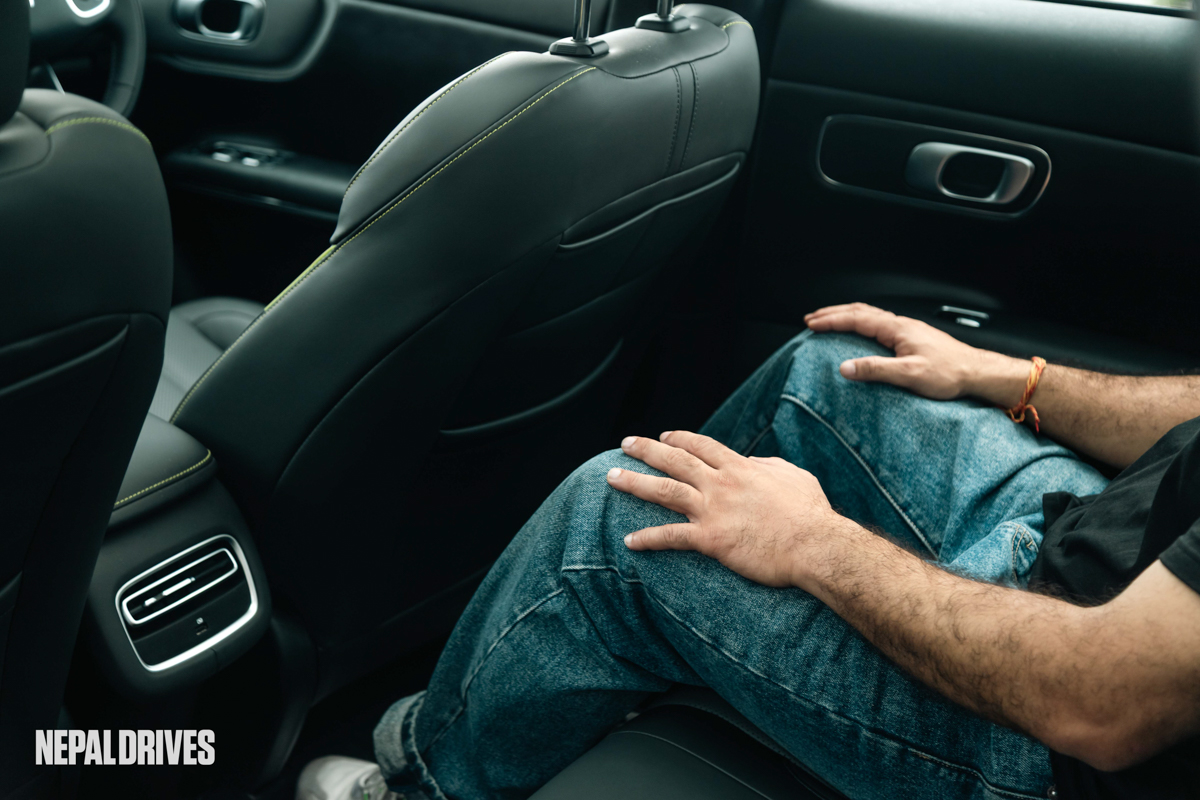
The latter can recline from 28 to 33 degrees, which is precisely the sort of feature you don't think you need until somebody in the back starts complaining about the seating position on a long drive. Ambient lighting is another nice touch, with 256 colours and independent two-zone colour control.
It is all very well integrated, too. The Q05 doesn't feel like someone went through a checklist of features and started sticking them wherever there was room. It doesn't feel like it is trying desperately to prove how much equipment it has. It simply has a lot of equipment.
PERFORMANCE AND SAFETY
The Q05 is powered by a 120 kW permanent-magnet synchronous motor, producing 163 PS, with drive going to the front wheels. It will do 0–100 km/h in 8.2 seconds and has a claimed top speed of 160 km/h.
In the short time we spent with the Nevo Q05, we found it to be a very comfortable car to drive around the city, with a supple ride and decent range. The 120 kW motor is more than enough for the city and the highway.
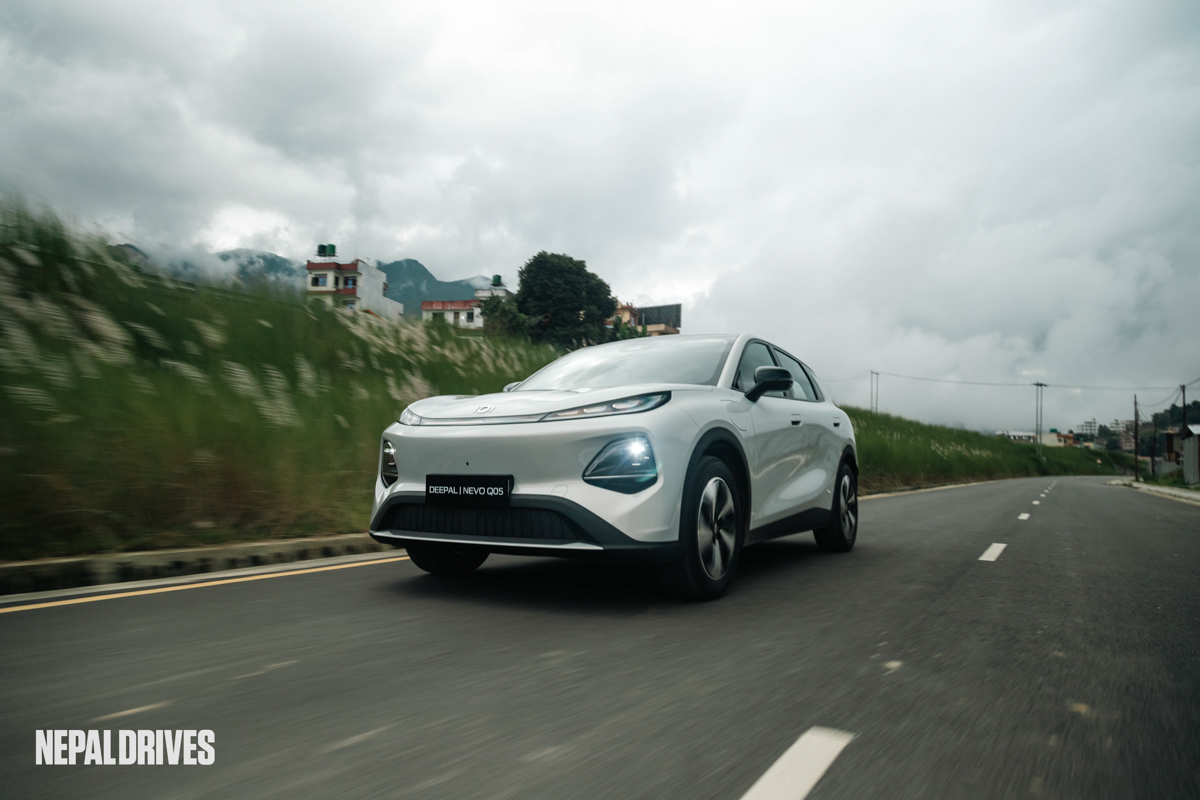
And while some may say the torque delivery isn't as prominent as that of some of its competition, you'll be hard-pressed to find anyone who says it feels inadequate. This isn't supposed to be a performance-oriented car. It is an everyday family car, and the way the Q05 delivers its performance suits that purpose rather well.
Underneath, there is a 51.9 kWh LFP battery. Changan uses CATL's Golden Shield 2.0 battery technology. The claimed range is 462 km under the NEDC test cycle, although, as always, real-world range will depend on driving conditions, temperature, traffic and how enthusiastically you use that 120 kW motor.
Charging is another strong point. The Q05 supports up to 162 kW DC fast charging, with a claimed 30–80 percent charging time of just 15 minutes. Unfortunately, Nepal does not have 162 kW DC chargers that we know of. Its maximum AC charging rate is 6.6 kW.
Then there is V2L, rated at 3.3 kW, allowing you to use the Q05 as a mobile power source. Whether that means running camping equipment, lights or something considerably more ridiculous is entirely up to you.
Safety equipment is extensive as well. The Q05 comes with 18 ADAS features, including adaptive cruise control, traffic jam assist, lane-centering control, lane-departure warning, forward-collision warning and automatic emergency braking. The Ultra adds rear-collision warning, blind-spot detection, rear cross-traffic alert and rear cross-traffic braking, among others. The notifications and alarms, though, do get tiresome.
There is also a 360-degree camera system with transparent-chassis functionality, along with ABS, EBD, brake assist, electronic stability control, hill-hold control, hill-descent control, traction control, tyre-pressure monitoring and the usual collection of airbags and electronic safety systems.
For a car intended to sell in volume, that matters.
VERDICT
The Changan Nevo Q05 is interesting because it feels like it's worth the money you pay for it.
The S07 made a splash because it was loud. The S05 made sense because it was more restrained. The Q05 seems to take that philosophy one step further and ask a rather straightforward question: How much car can you realistically put into an EV at this price? The answer, as it turns out, is quite a lot. And then there is the ownership proposition.
MAW Vriddhi's charging network gives the Q05 a useful advantage for people who actually intend to use their EVs beyond the Kathmandu Valley, while the five-year/150,000-kilometre whole-vehicle warranty provides a very long safety net for buyers in this segment.
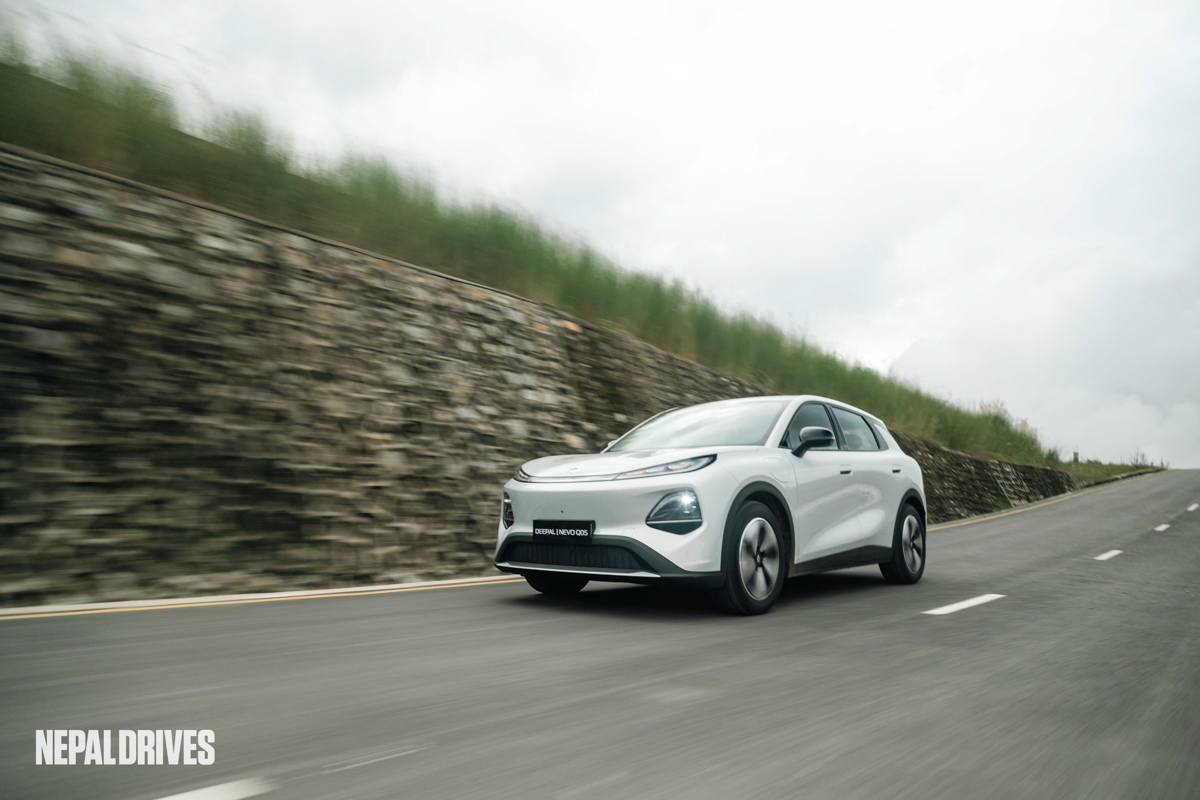
Starting at Rs. 48.99 lakh and going up to Rs. 51.99 lakh for the Ultra, the Nevo Q05 is difficult to ignore. It isn't trying to be the fastest EV in the segment. It isn't trying to look like a supercar. And thankfully, it isn't trying to convince you that a collection of sharp creases constitutes a personality.
Instead, it is comfortable, well-equipped, spacious, reasonably quick and backed by an ownership package that makes sense for Nepal.

Jetour T2: Ready 2 Rumble
Arcfox T1: Into The Thick of It
Yamaha XSR155: A Lot to Like, A Little More to Want